Art Deco Interior Design
Art Deco turns geometry, craftsmanship, and theatrical contrast into rooms that feel composed rather than merely expensive. Its strongest interiors balance disciplined symmetry with one or two luxurious materials and a confident focal point.
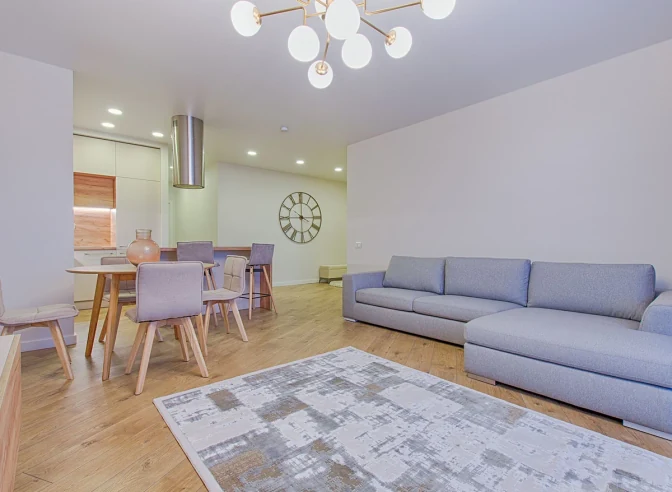
Design recipe for the Art Deco interior style
You do not need a 1920s apartment or a room full of antiques. Start with structure: repeated curves or stepped lines, a deep color against a pale ground, and metallic detail used as punctuation instead of decoration everywhere.
- Palette
- Black, cream, deep navy, emerald, oxblood, and warm neutrals, sharpened with brass, chrome, or antiqued gold. Keep the palette limited so the geometry remains legible.
- Materials
- Lacquered or dark-grained wood, velvet, marble, fluted glass, polished metal, mirror, and geometric stone or tile. One authentic-looking hero material is better than several imitations.
- Lighting
- Use symmetrical sconces, opal globes, tiered pendants, or a sculptural chandelier. Warm dimmable light protects the richness of dark colors and reflective finishes.
- Furniture
- Choose substantial furniture with vertical channel stitching, curved backs, edges that curve smoothly downward, or stepped geometric details. Balance each bold focal piece with simpler furniture.
Four rules that make the Art Deco interior style work
The style reads clearly when geometry and contrast organize the room. Luxury is the finish, not the starting point.
What usually goes wrong
Avoid covering every surface in gold, black, and zigzags. That creates a costume set rather than an Art Deco interior. Keep modern necessities simple, use genuine material contrast where it matters, and leave visual rest around statement pieces.
A useful AI design prompt
Redesign this room in a refined Art Deco style with disciplined symmetry, one repeated geometric motif, deep jewel-tone accents, cream or pale stone surfaces, dark wood, fluted glass, restrained brass detail, sculptural warm lighting, and elegant curved furniture. Keep the architecture and layout realistic and avoid excessive gold or themed props.
Ideas in the Art Deco style across real room types
Compare how the same design language changes between living, sleeping, working, dining, cooking, and bathing spaces before applying it to your own room.
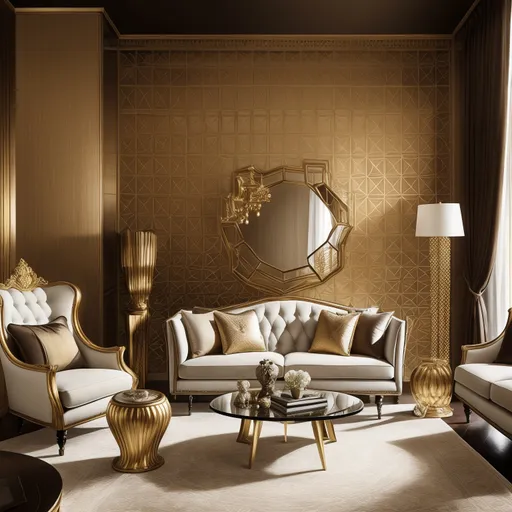
Living Room 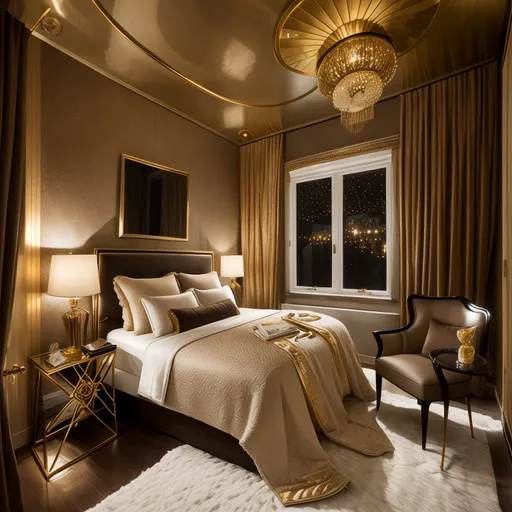
Bedroom 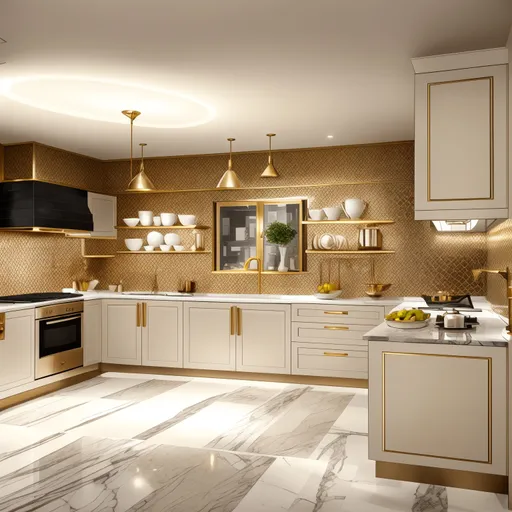
Kitchen 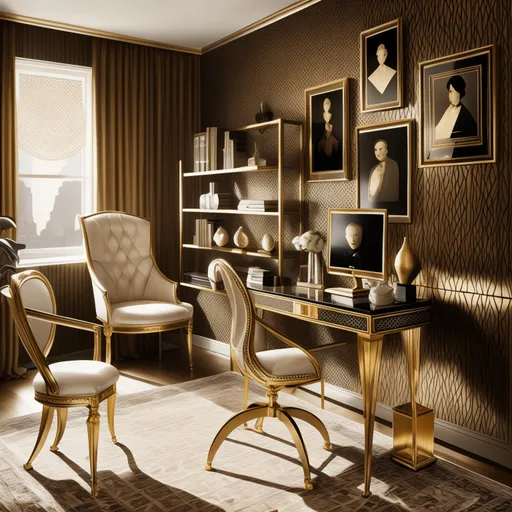
Home Office 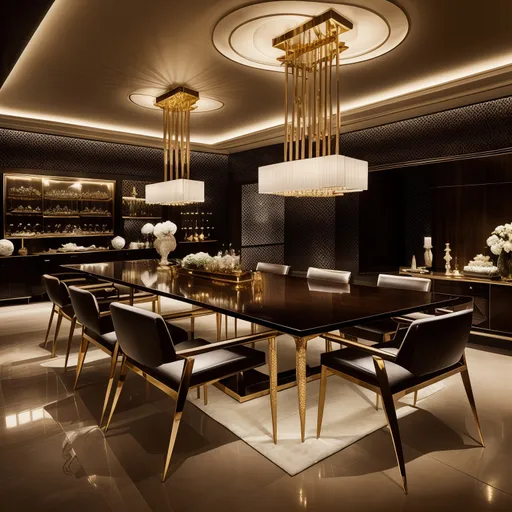
Dining Room 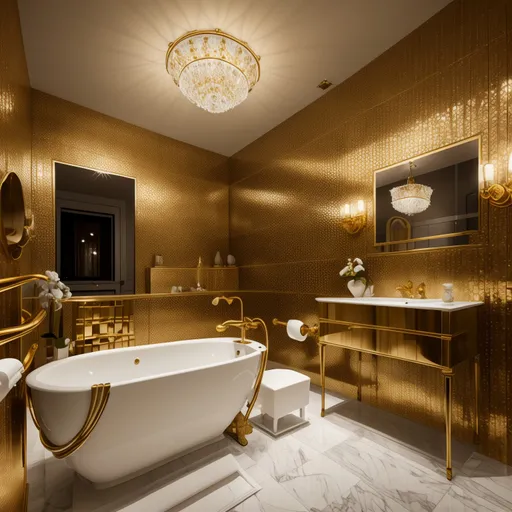
Bathroom
Choose a space to redesign
Color Tools
Compare another interior style
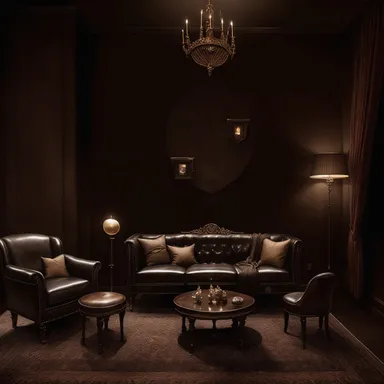 Dark AcademiaA scholarly, atmospheric interior built from books, aged wood, deep color, and layered warm light.
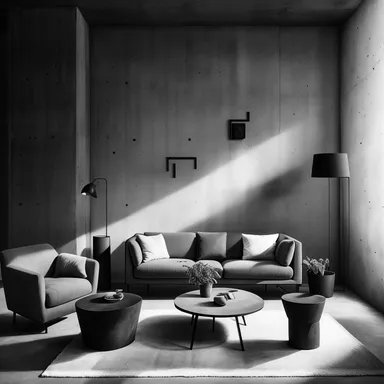 BrutalistMonolithic form, honest materials, and architectural restraint balanced with warmth and human comfort.
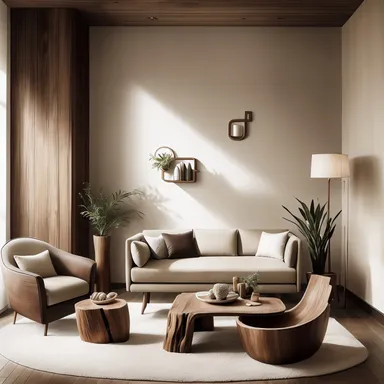 Organic ModernClean contemporary structure softened by curved forms, tactile neutrals, and nature-led materials.