Modern Interior Design
Modern interior design grew out of the early twentieth-century modern movement, which held that form should follow function. It favors clean horizontal lines, open plans, generous daylight, and wood, steel, glass, and leather shown without ornament.
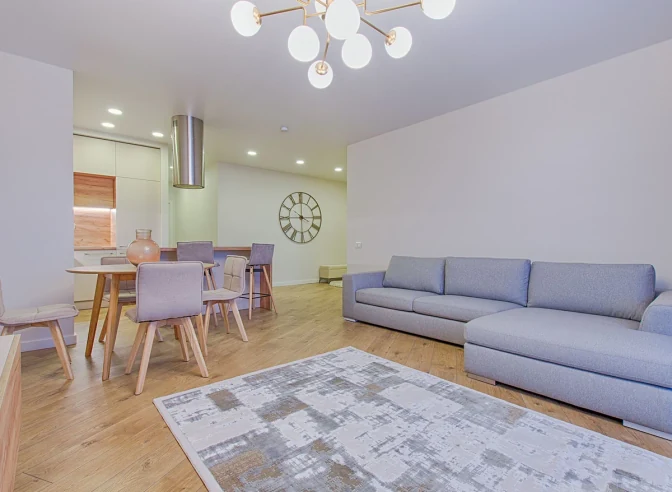
Design recipe for the Modern interior style
Modern does not mean cold, and it does not simply mean new. Clear surfaces first and keep fewer, better-made pieces on slim legs. Then add warmth with wood grain, one strong color, and textiles that soften hard edges.

- Palette
- White, warm gray, charcoal, and black with walnut or oak browns. Add one or two saturated accents such as mustard, burnt orange, olive, or teal, kept to small areas.
- Materials
- Walnut, teak, or oak, brushed or tubular steel, glass, leather, wool, polished concrete, and stone. Show each material plainly rather than hiding it under decorative finishes.
- Lighting
- Let daylight in through bare or simply dressed windows. Add an arc floor lamp, globe pendants, and slim adjustable task lights, treating each fixture as a sculptural accent.
- Furniture
- Choose low, horizontal pieces on slim legs: a straight-backed sofa with tight upholstery, a pedestal or slab table, and molded or bentwood chairs. Leave floor visible beneath them.
Four rules that make the Modern interior style work
Modern rooms look effortless because every choice answers a practical question. Remove what has no job, then refine what remains.
What usually goes wrong
Avoid a showroom of matching furniture, and avoid stripping the room until it feels unfinished. Too much white and chrome reads clinical, while trend pieces from every decade blur the style. Let one or two materials bring warmth.
A useful AI design prompt
Redesign this room in a warm modern style with clean horizontal lines, an uncluttered open layout, low furniture on slim legs, a white and warm gray base, walnut or oak wood, black metal details, leather and wool textiles, one mustard or burnt orange accent, a sculptural floor lamp, and simply dressed windows. Keep the architecture and layout realistic and avoid ornate trim, clutter, or a cold all-white showroom look.
Ideas in the Modern style across real room types
Compare how the same design language changes between living, sleeping, working, dining, cooking, and bathing spaces before applying it to your own room.
Living Room 
Bedroom 
Kitchen 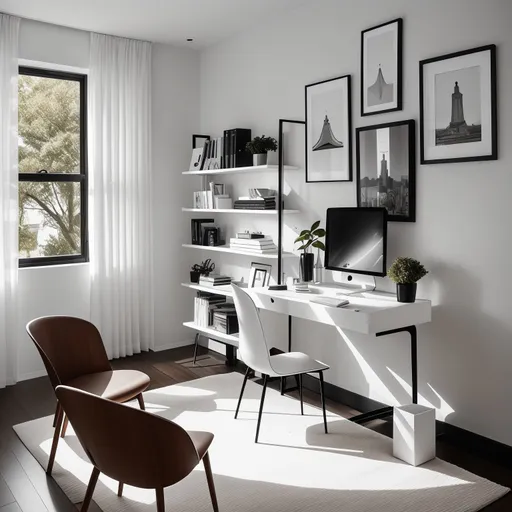
Home Office 
Dining Room 
Bathroom
Choose a space to redesign
Color Tools
Compare another interior style
 ScandinavianLight-filled rooms, pale wood, soft textiles, and practical furniture that feels calm and welcoming.
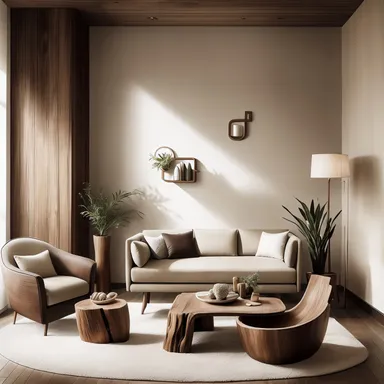 Organic ModernClean contemporary structure softened by curved forms, tactile neutrals, and nature-led materials.
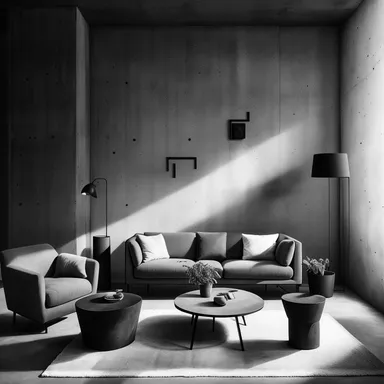 BrutalistMonolithic form, honest materials, and architectural restraint balanced with warmth and human comfort.