Wabi-Sabi Interior Design
Wabi-Sabi values the quiet beauty of impermanence, incompleteness, age, and natural irregularity. In interiors, that means fewer objects, honest repair, tactile materials, asymmetrical balance, and enough emptiness to notice subtle change.
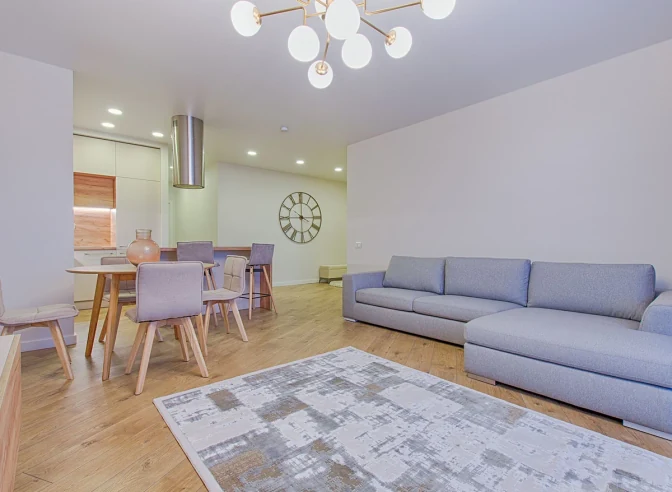
Design recipe for the Wabi-Sabi interior style
It is not a distressed finish applied to new objects or another name for beige minimalism. The most convincing rooms evolve from materials and possessions that gain character through use, care, light, and time.
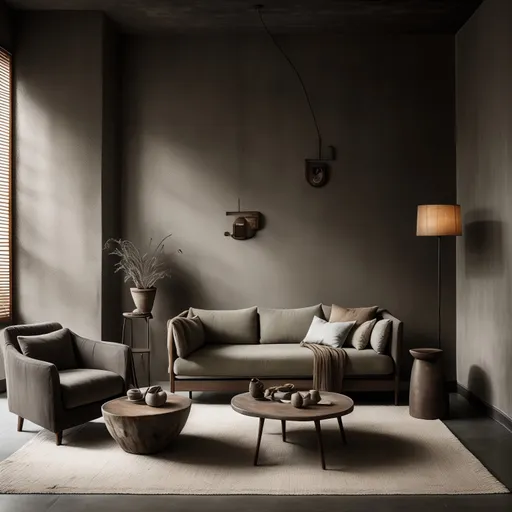
- Palette
- Chalk, ash, sand, clay, weathered brown, charcoal, faded indigo, muted moss, and warm off-white. Variation and patina matter more than perfectly matched color chips.
- Materials
- Clay plaster, aged or hand-worked timber, stone, linen, hemp, wool, paper, iron, matte ceramic, woven fiber, and repaired or inherited objects with genuine history.
- Lighting
- Use natural shadow, paper or fabric diffusion, small pools of warm light, and fixtures with simple tactile forms. Avoid flattening every surface with uniform brightness.
- Furniture
- Choose simple, grounded pieces with visible grain, handwork, softened edges, or a useful history. Allow asymmetry and open space rather than completing a matching set.
Four rules that make the Wabi-Sabi interior style work
Wabi-Sabi cannot be bought as a complete look. It emerges through restraint, care, natural change, and acceptance of what is already imperfect.
What usually goes wrong
Avoid artificially distressing every new object, buying mass-produced imperfection as a theme, confusing neglect with patina, or copying sacred cultural objects without context. Wabi-Sabi requires care: damaged, damp, unsafe, or unhygienic materials still need repair.
A useful AI design prompt
Redesign this room with a respectful Wabi-Sabi sensibility using a restrained chalk, clay, ash, weathered brown, and muted moss palette, natural irregular plaster, aged or hand-worked timber, linen, paper, stone, matte ceramic, simple grounded furniture, asymmetrical balance, visible but sound patina, a few useful handmade objects, generous open space, and soft pools of warm light. Avoid artificial distressing, decorative clutter, or a generic beige showroom.
Ideas in the Wabi-Sabi style across real room types
Compare how the same design language changes between living, sleeping, working, dining, cooking, and bathing spaces before applying it to your own room.
Living Room 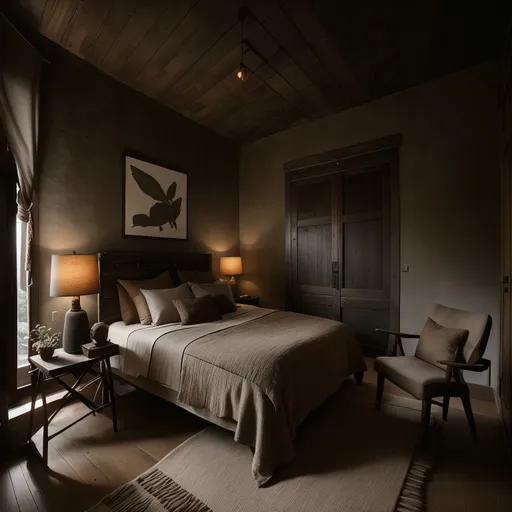
Bedroom 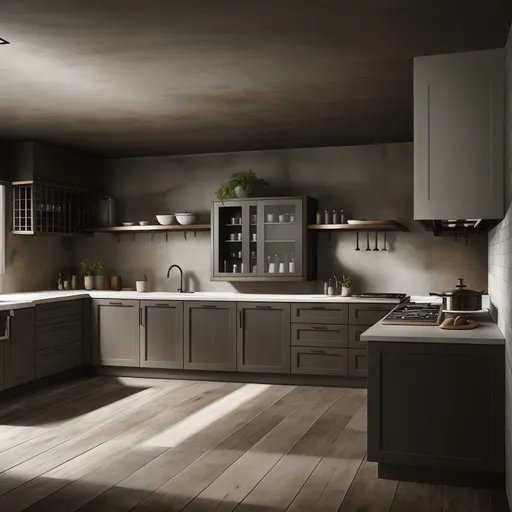
Kitchen 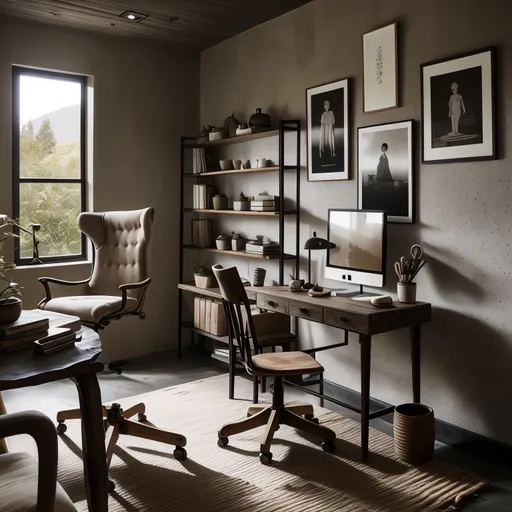
Home Office 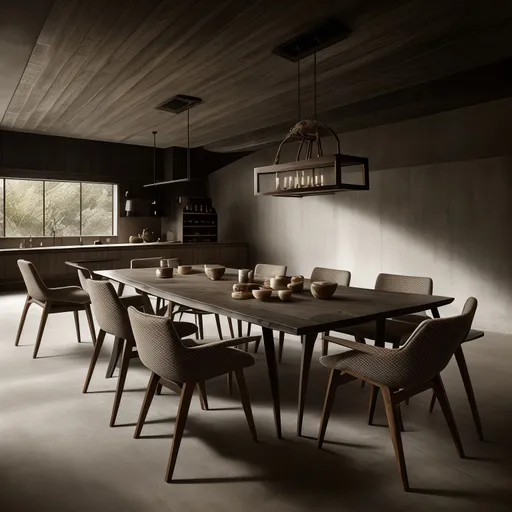
Dining Room 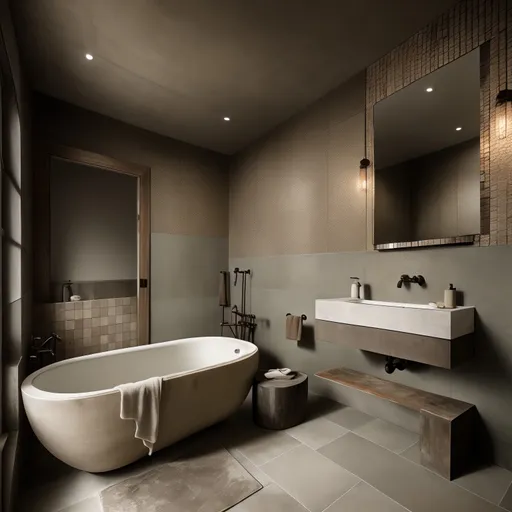
Bathroom
Choose a space to redesign
Color Tools
Compare another interior style
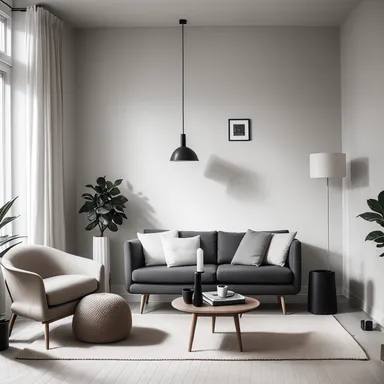 JapandiJapanese restraint meets Scandinavian warmth through natural materials and purposeful simplicity.
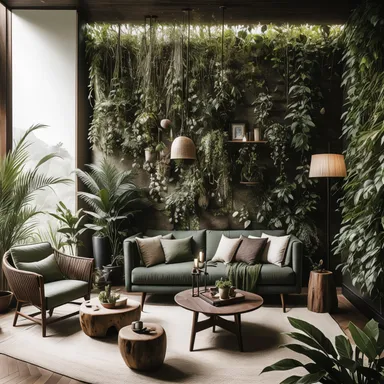 BiophilicA nature-connected interior shaped by daylight, plants, fresh air, natural materials, views, and seasonal change.
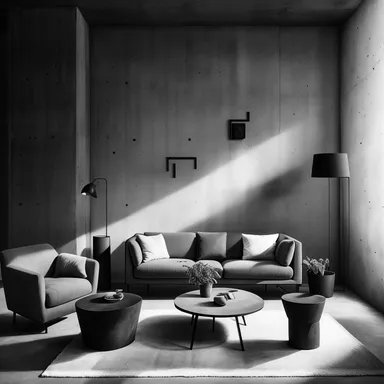 BrutalistMonolithic form, honest materials, and architectural restraint balanced with warmth and human comfort.